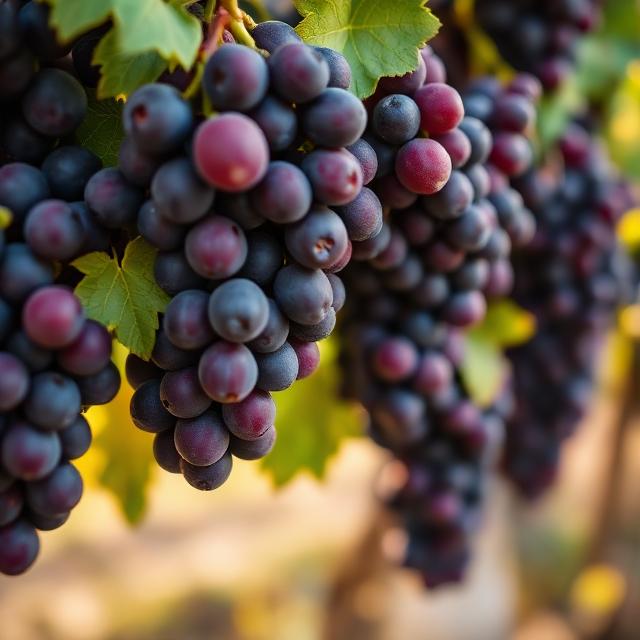
Cabernet, Merlot, Pinot Noir, Syrah and Sangiovese — five shapes to recognise blind.
Skin thickness sets the frame
Tannin, colour and most aroma compounds live in the skin. Small, thick-skinned berries such as Cabernet Sauvignon give dark, firm, structured wine. Thin-skinned Pinot Noir gives pale colour, low tannin and perfume. Before you memorise flavours, learn to read the wine's weight — it is a better clue to the grape than any single fruit note.
The five silhouettes
Cabernet Sauvignon: blackcurrant, cedar, firm grip. Merlot: plum, cocoa, rounder edges. Pinot Noir: red cherry, undergrowth, silky. Syrah: black pepper, olive, dark fruit and a savoury spine. Sangiovese: sour cherry, dried herb, high acid and dusty tannin. Say them out loud until they are five distinct characters, not one blur of 'red wine'.
Blends explain more than they hide
Bordeaux blends Cabernet with Merlot because one lends structure and the other flesh. Châteauneuf-du-Pape can use thirteen varieties. When a wine feels balanced in a way no single grape achieves, suspect a blend and look for the parts.
- 1. Line up a Cabernet and a Pinot Noir. Rank them for colour depth, tannin and body without tasting.Hint: Hold both glasses over white paper. The Pinot should be see-through at the core.
- 2. Write a one-line character sketch for each of the five reds from memory.Hint: Use one fruit, one texture and one savoury note per grape.