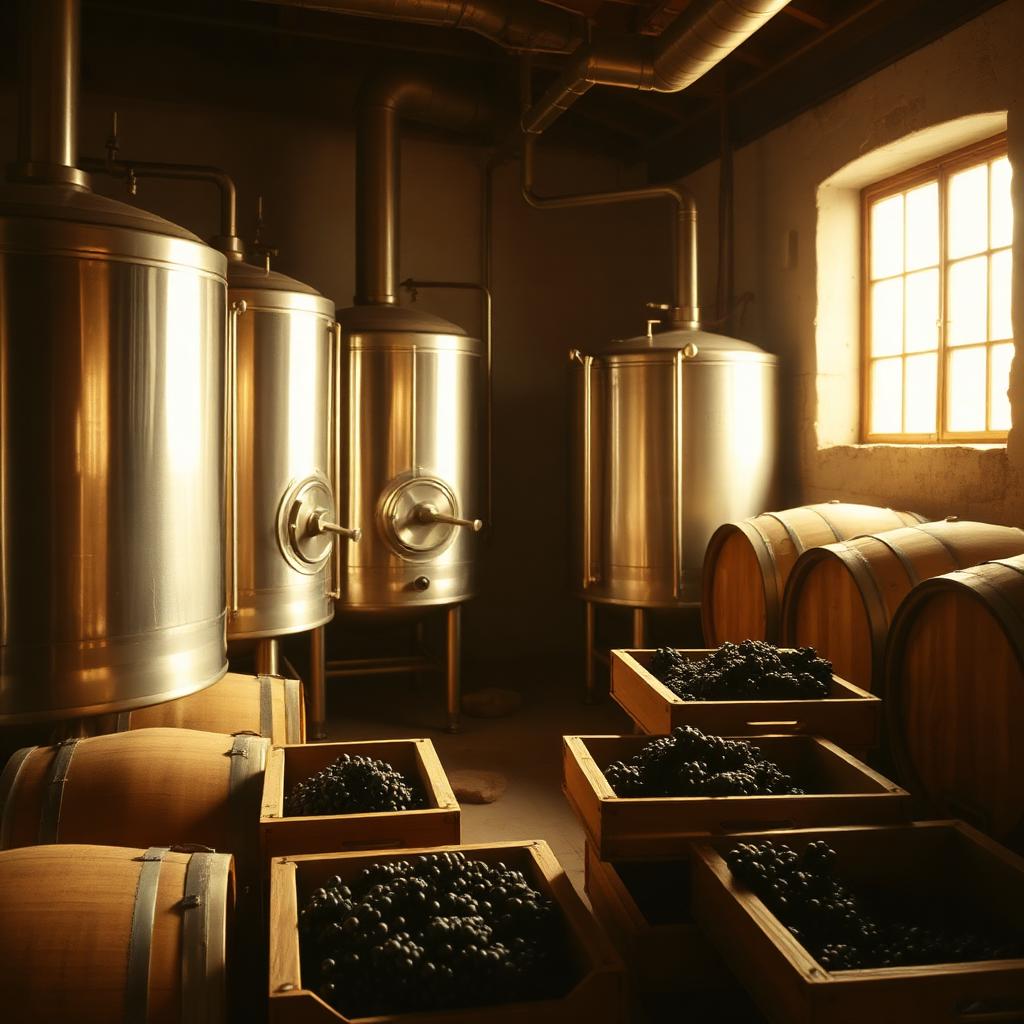
Fermentation is one simple equation with a dozen human choices bolted onto it. Learn which choices you can taste.
The equation
Yeast converts grape sugar into roughly equal parts alcohol and carbon dioxide, plus heat. As a rule of thumb, 17g of sugar per litre yields about 1% alcohol, which is why a 14% wine started life as very ripe fruit at around 240g/L of sugar. Nothing is added to make wine alcoholic; ripeness decides it in the vineyard.
Wild or cultured
Cultured yeast strains ferment predictably and cleanly. Ambient (wild) yeast populations start slowly, hand over between species and often leave a wider, sometimes funkier aromatic range. Neither is better — but a wine fermented ambiently is more likely to smell of bread dough, orchard skin or sourdough tang alongside the fruit.
Malolactic and lees
A second, bacterial conversion turns sharp malic acid into softer lactic acid. Nearly all reds go through it; whites do so only when the winemaker wants that creamy, buttery register — the diacetyl in an oaky Chardonnay. Leaving the wine on its dead yeast (lees) and stirring it adds savoury breadth and a fuller texture without any oak at all.
Skins are the switch
Red juice is not red. Colour, tannin and most structure come from time on skins. Ferment red grapes off their skins and you get a white-looking wine (blanc de noirs); leave white grapes on skins for weeks and you get an orange wine with tannin. The grape sets the aroma; skin contact sets the shape.
- 1. Read the ABV on two bottles in your kitchen and work backwards to the sugar at harvest.Hint: Divide grams of sugar per litre by 17 for approximate ABV — so 13% needed roughly 220g/L.
- 2. Find a white wine that smells of butter or cream and check the back label for 'malolactic' or 'lees'.Hint: Buttery aroma comes from diacetyl, produced during malolactic conversion, not from added dairy or oak alone.
- 3. Taste a rosé and a red made from the same grape and estimate the hours each spent on skins.Hint: Pale provençal rosé is often 2–12 hours; a structured red is days to weeks.