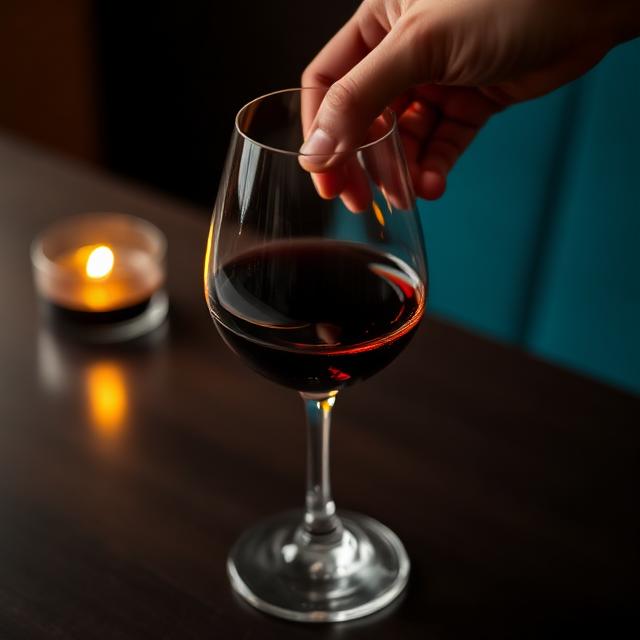
Glassware, temperature, colour and rim — the free information before you sniff.
Set the table first
A tulip glass, 50ml, white background, no perfume or coffee nearby. Serve whites at 8–12°C and reds at 14–18°C. Half the disagreements about a wine are really disagreements about its temperature.
Read the rim
Tilt the glass over white and look where the wine thins out. A purple rim on a red means youth; garnet means some age; brick or tawny means real age or a lighter grape. In whites, water-white suggests young and unoaked, deep gold suggests age, oak or botrytis.
What colour cannot tell you
Legs mean alcohol, not quality. Sediment means the wine was unfiltered or old, not faulty. Tiny bubbles in a still wine are usually harmless dissolved CO₂ from bottling.
EXERCISES
Taste this chapterFIVE STEPS, THIS CHAPTER'S BOTTLES- 1. Pour the same red into a tumbler and a tulip glass. Compare the aroma.Hint: The tulip should concentrate aroma noticeably.
- 2. Taste one red at 20°C, then chilled 20 minutes. Note which one you prefer.Hint: Warm reds taste more alcoholic and less fruity.